On-Road vs. Off-Road RC Cars: Which Should You Buy?
Before narrowing down a specific category, it's worth answering one broader question: on-road or off-road? It affects nearly everything else about which car makes sense for you.
On-road: speed and precision, pavement only
On-road and touring cars (see our on-road/touring and drift guides) are built for smooth, hard surfaces — driveways, parking lots, tracks. They're generally faster and more precise-feeling than off-road cars of similar price, but their low ground clearance and grip-focused tires struggle on grass, dirt, or gravel.
Off-road: built for anywhere
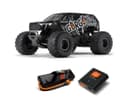
Monster trucks, buggies, short course trucks, rock crawlers, and rally cars are all off-road categories, each suited to different terrain (see each category's own buying guide for specifics). The common thread is more ground clearance and suspension travel, which makes them far more forgiving of imperfect surfaces — grass, dirt, gravel, and light obstacles are all fair game.
How to decide
If you have consistent access to smooth pavement (a driveway, a parking lot, an actual track) and want speed and precision, on-road is worth it. If you don't — most backyards, parks, and trails aren't smooth pavement — an off-road category will simply work in more places, which is why it's the more common recommendation for a first RC car.
A Mix of On-Road and Off-Road Cars